The BC Energy Regulator monitors air quality which can be impacted by flaring, venting and equipment exhaust from energy resource activities.
Through administration of the Energy Resource Activities Act (ERAA), Drilling and Production Regulation, Environmental Management Act, and Oil and Gas Waste Regulation, we authorize, regulate and limit air discharges to the environment from energy resource activities.
Our Monitoring Equipment
We utilize a number of different air quality monitors:
CAMEL
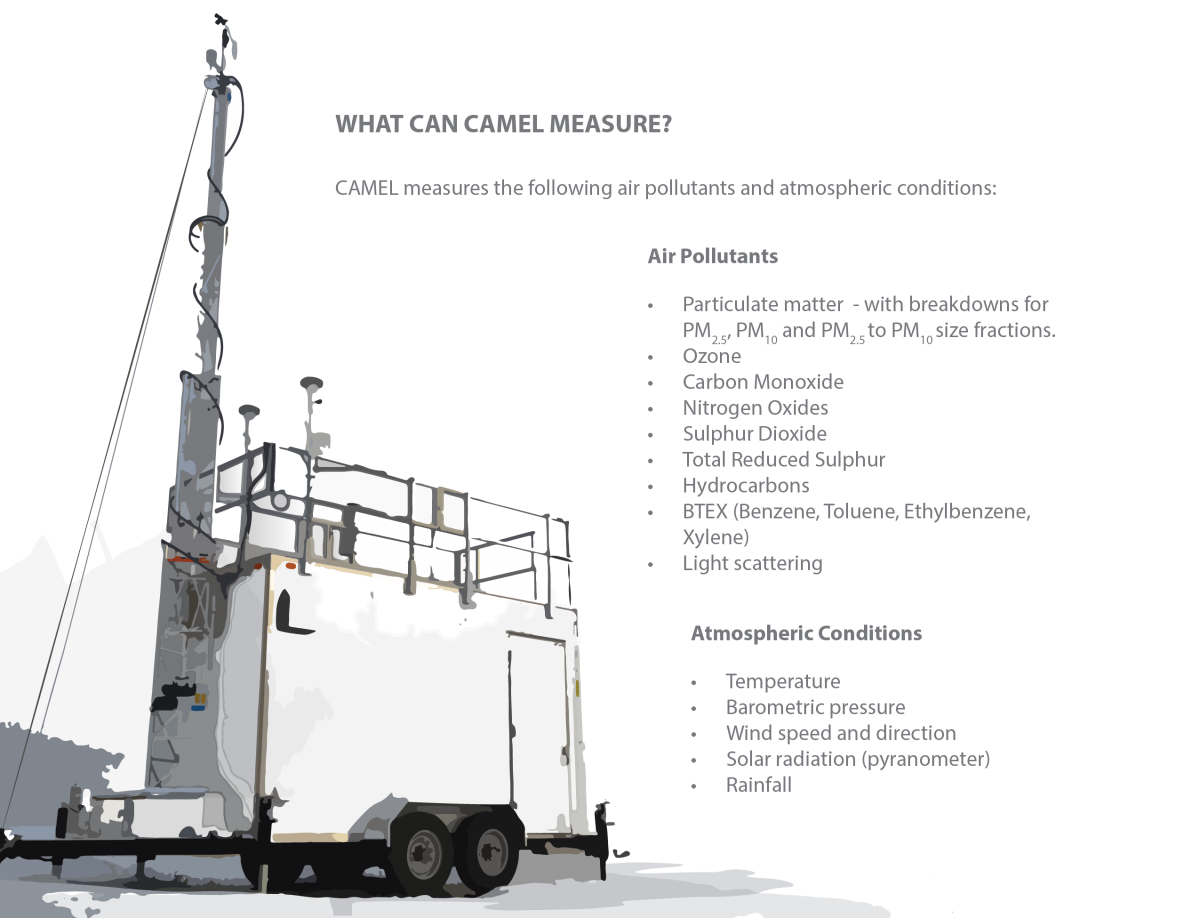
The BCER Air Monitoring Environmental Laboratory (CAMEL) is a mobile trailer unit fitted with a full suite of sensory equipment designed to measure and record air contaminants - gases and suspended particulate matter with chemical properties that can impact air quality.
Being mobile and capable of continual collection and measurement of data, CAMEL can be deployed to measure air quality and potential sources of airborne contaminants in locations that do not have fixed air monitoring stations.
The recently developed Regulator Air Tool (CAT) is an interactive, web-based map that provides public access to information on air discharges from oil and gas operations and monitoring data collected by CAMEL.
RAM
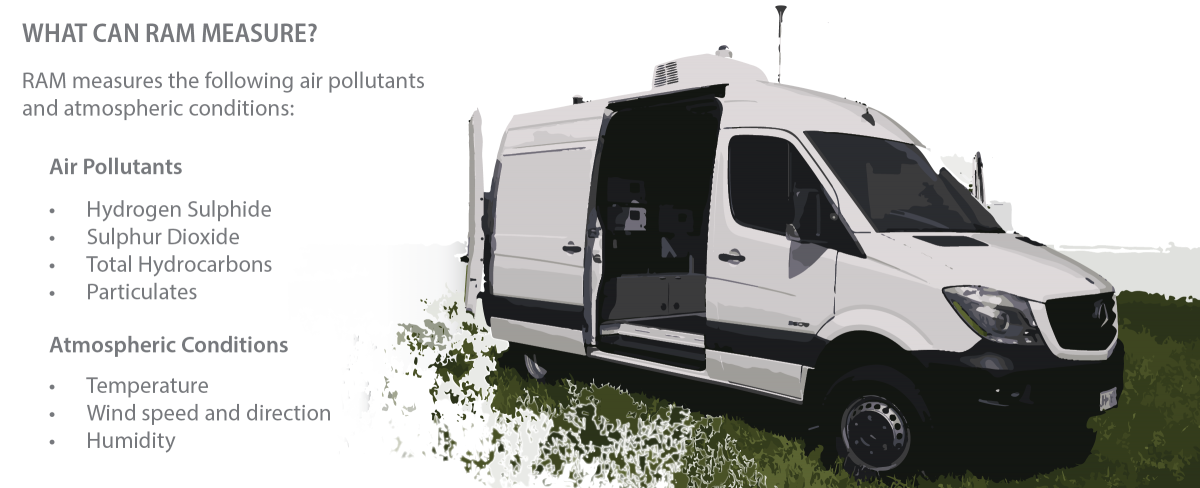
We have a second mobile unit containing specialized ambient monitoring equipment. Designed as a quick response unit for addressing emergencies and urgent concerns is the Roaming Air Monitor (RAM) van.
As a quick response unit, RAM is usually stationed at our Fort St. John office for instantaneous deployment. When RAM is not being used for quick response, it can be used for short-term air monitoring.
RAM is able to produce a trace of air monitoring while in motion and can respond to situations where there are air quality concerns and provide perspective for where air contaminants originate.
RAM Deployment in Kitimat, B.C.
These reports and supplementary data files provide a summary of air quality monitoring conducted in Kitimat, B.C., using the BCER's Roaming Air Monitoring Vehicle (RAM).
May to November 2024 - Before and during the early commissioning phase of the LNG Canada facility: Report (pdf) | Data files (.zip)
July to October 2025 - During commissioning and early operations of the LNG Canada facility: Report (PDF) | Data files (.zip)
Farmington Community Hall Station
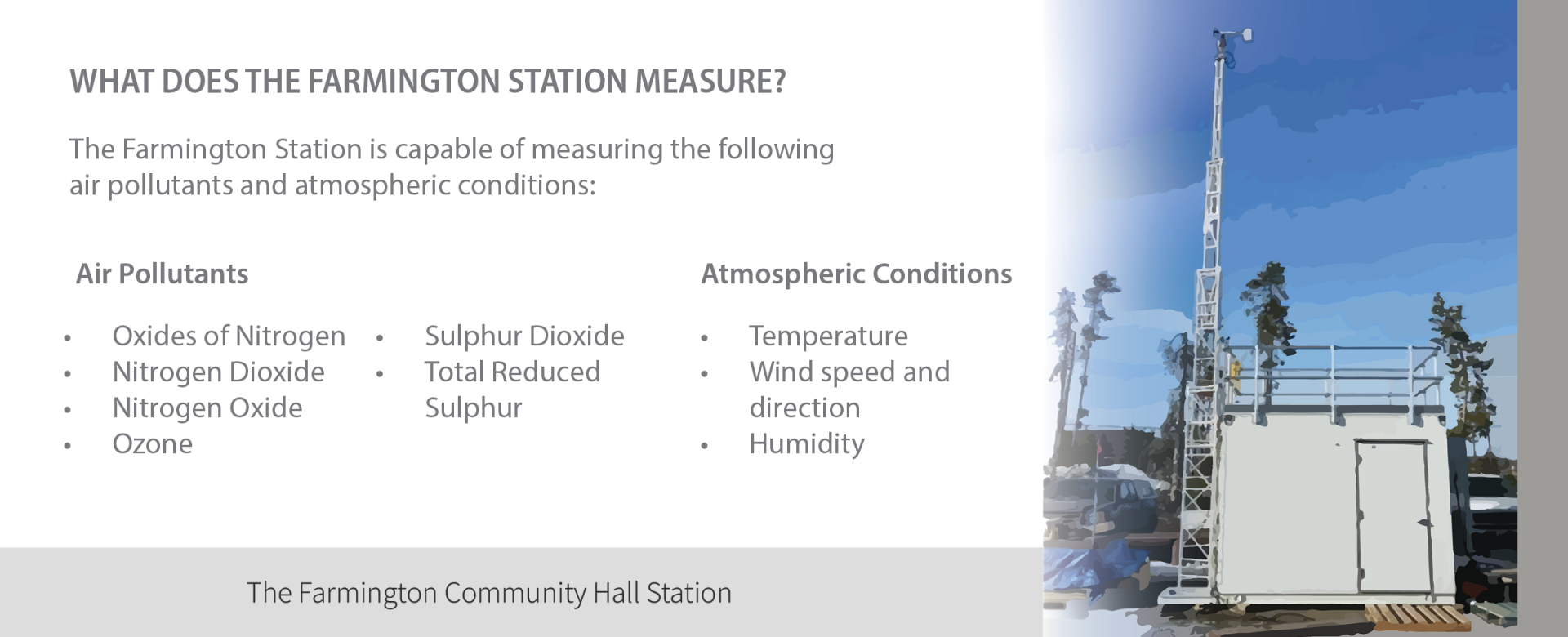
The Farmington Community Hall Station is a fixed station deployed for a period of years to monitor community air quality. Summary information on the results of its ambient air monitoring are available within the BC Air Data Archive and on the Oil and Gas Research and Innovation Society (OGRIS) website.
Portable Monitors
Where the public has raised concerns regarding air quality resulting from energy resource activities, we can respond with AreaRAE Pro Plus transportable air monitors.
These monitors are the size of a small suitcase, and can measure:
- Hydrogen sulphide (H2S).
- Sulphur dioxide (SO2).
- A subset of hydrocarbons known as volatile organic compounds (VOCs).
- Meteorology such as wind speed and direction and relative humidity.
While AreaRAE monitors are not able to detect levels as low as CAMEL and RAM, they are an effective complement to the BCER's monitoring units.
Our monitoring equipment is deployed based on the following considerations:
- Protection of public safety.
- Community engagement.
- Oil and gas / energy resource industry focus.
- Ensuring industry compliance with permits, regulations, and ERAA conditions.
- Ensuring industry compliance with ambient air quality standards.
- Assessment of trends in relation to expanded development.
- Tracking spatial distribution of air contaminants.
- Research and increased knowledge.
Tracking GHGs
Greenhouse gases, or GHGs, are gases in the earth’s atmosphere that absorb and emit energy and contribute to climate change. GHGs typically released from energy resource activity operations are predominantly carbon dioxide and methane, and to a lesser extent nitrous oxide.
Establishing an inventory of GHGs is important. By monitoring and cataloguing emissions, GHG sources and trends are identified and tracked. The findings inform the strategies and policies developed to reduce emissions and provide a baseline for monitoring progress towards attaining reduction targets.
British Columbia releases an annual Provincial Greenhouse Gas Emissions Inventory (Inventory), including GHG emissions from oil and gas resources.
Reducing Methane Emissions
Reducing methane emissions from the oil and gas sector is a key component of the CleanBC Roadmap to 2030. The Methane Emissions page contains information on our actions to monitor and reduce methane emissions in accordance with provincial targets.
Emissions Sources
Flaring: Flaring is the burning of natural gas that cannot be processed or sold. It is a necessity for certain aspects of oil and gas production. All flaring in B.C. must be conducted in accordance with BCER regulations and government air quality objectives and standards.
Flaring can occur at the production phase, during well cleanup and testing, solution gas flaring and for safety reasons during process upsets. Flaring can also occur during the processing phase, for safety reasons.
Over time flaring has generally decreased. The BC Energy Plan target of eliminating all routine associated gas flaring was achieved. While B.C. annual gas production has increased by 2.5 times over the past 20 years, flaring volume has decreased by approximately one third.
Venting: The intentional controlled release of un-combusted gases directly to the atmosphere.
Exhaust emissions: The release of gases resulting from combustion directly to the atmosphere.
Fugitive emissions: Unintentional releases of gas or fumes resulting from production, processing, transmission, storage, and delivery of gas. This may occur from breaks or small cracks in seals, tubing, valves and pipelines, or when lids or caps on equipment or tanks have not been properly closed or tightened.
We are dedicated to taking action to reduce greenhouse gas releases and continuing to address air contaminant releases from energy resource operations.